Are Ultra-Short-Throw (UST) Projectors Worth It? 2026 Buying Guide
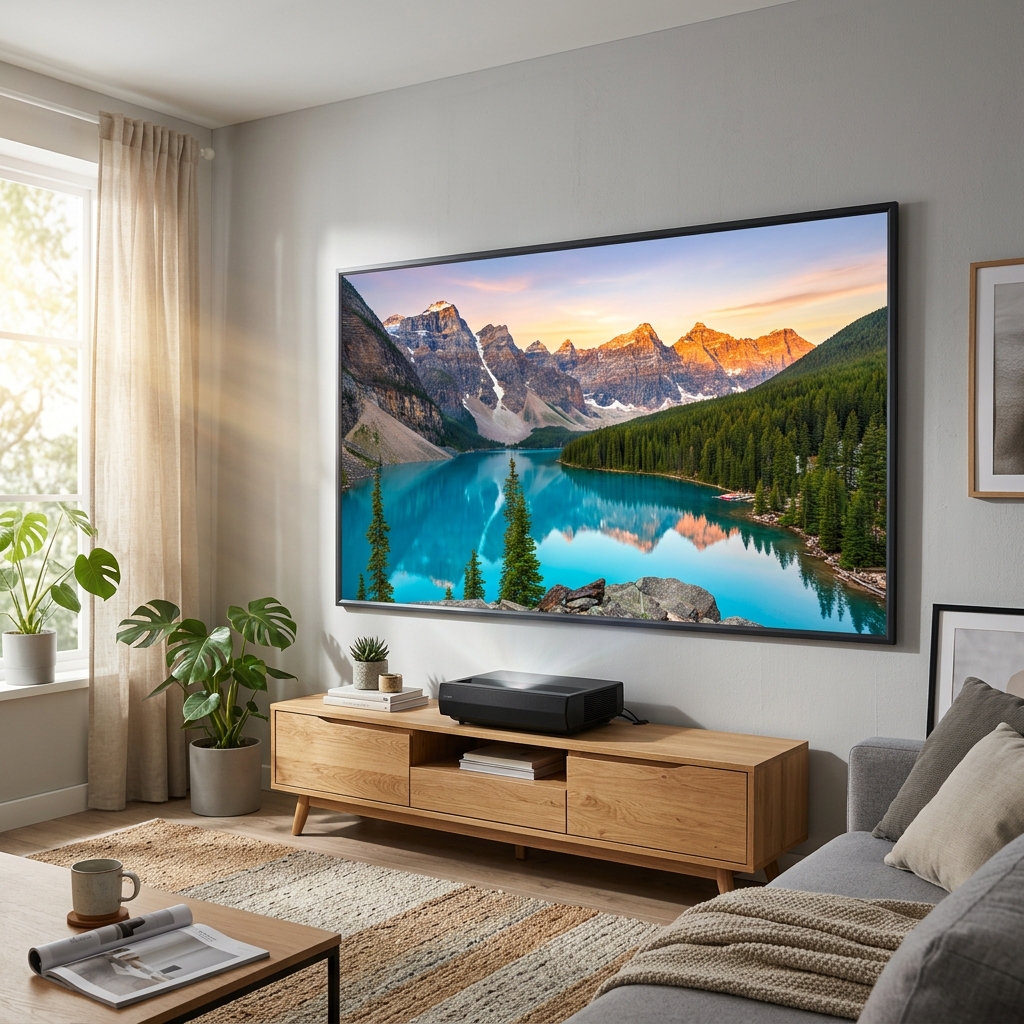
For decades, setting up a home theater projector meant drilling brackets into the ceiling, running long HDMI cables across the room, and completely blacking out your windows. Today, a new category of home entertainment is changing the game: Ultra-Short-Throw (UST) laser projectors.
Designed to sit on a media console just inches away from your wall, UST projectors promise a massive 100-inch or 120-inch screen experience without the installation headache of traditional long-throw models. But with premium price tags, are they truly worth the investment? In this unbiased review and buying guide, we'll examine the pros, cons, and essential requirements of UST projectors.
The Pros of Ultra-Short-Throw Projectors
1. Simple, Cable-Free Installation
Because a UST projector sits directly below the screen (often only 5 to 15 inches away), you do not need to run wires through the ceiling or walls. You simply place the unit on your existing TV stand, plug it into the wall, and connect your streaming devices or soundbar locally. This makes it perfect for apartments, rentals, or rooms where ceiling mounting is physically impossible.
2. Laser Light Source and Brightness
Most modern UST projectors utilize solid-state laser light engines instead of traditional UHP lamps. This offers two major benefits: an exceptionally long lifespan (typically 20,000 to 25,000 hours of use, meaning no bulb replacements) and instant power-on/off capability. Laser engines also produce higher, more concentrated brightness, allowing for decent viewing even in rooms with moderate ambient light.
3. Immersive Screen Size
While an 85-inch flat-screen TV is massive and extremely heavy, a UST projector can easily scale from 90 inches up to 120 or 150 inches with a single adjustment of its distance from the wall, all while keeping the physical footprint of the projector unit very compact.
The Cons of Ultra-Short-Throw Projectors
1. High Screen Dependency (ALR Screens)
This is the most important "hidden cost" of UST projectors. Because the light is projected upward at an extreme angle, projecting onto a standard white wall or a cheap pull-down screen will amplify every minor wrinkle and wall texture, resulting in a distorted image. To get a clear, high-contrast image during the day, you **must** pair a UST projector with an **Ambient Light Rejecting (ALR) screen** designed specifically for ultra-short-throw systems. These screens have micro-structures that reflect the projector's light toward your eyes while blocking overhead ambient light, but they can easily cost an additional $600 to $1,500.
2. Physical Alignment and Console Height
Aligning a UST projector is a game of millimeters. Even a tiny shift in the projector's position will result in a distorted trapezoidal image. Your media console must be perfectly level, and it must be low enough so that the projected image doesn't end up on your ceiling, especially when aiming for a 120-inch display.
Is a UST Projector Right for You?
If you want a true cinematic experience with a screen size larger than 85 inches but do not want a massive black screen permanently dominating your living room wall when turned off, a UST projector is an exceptional choice. It blends seamlessly into your living room decor and offers a theater-like experience that TVs cannot match.
When selecting a UST projector, look for models that combine high lumen output with premium optics. Flagship systems like the Claria CLR45 Laser Projector offer up to 10,000 lumens and 8K auto-focus capabilities, ensuring that even with ambient light in the room, the color saturation and text clarity remain sharp and vibrant, making the transition from a traditional TV to a laser projector smooth and rewarding.


