Sonos vs Bose home theater compared in 2026
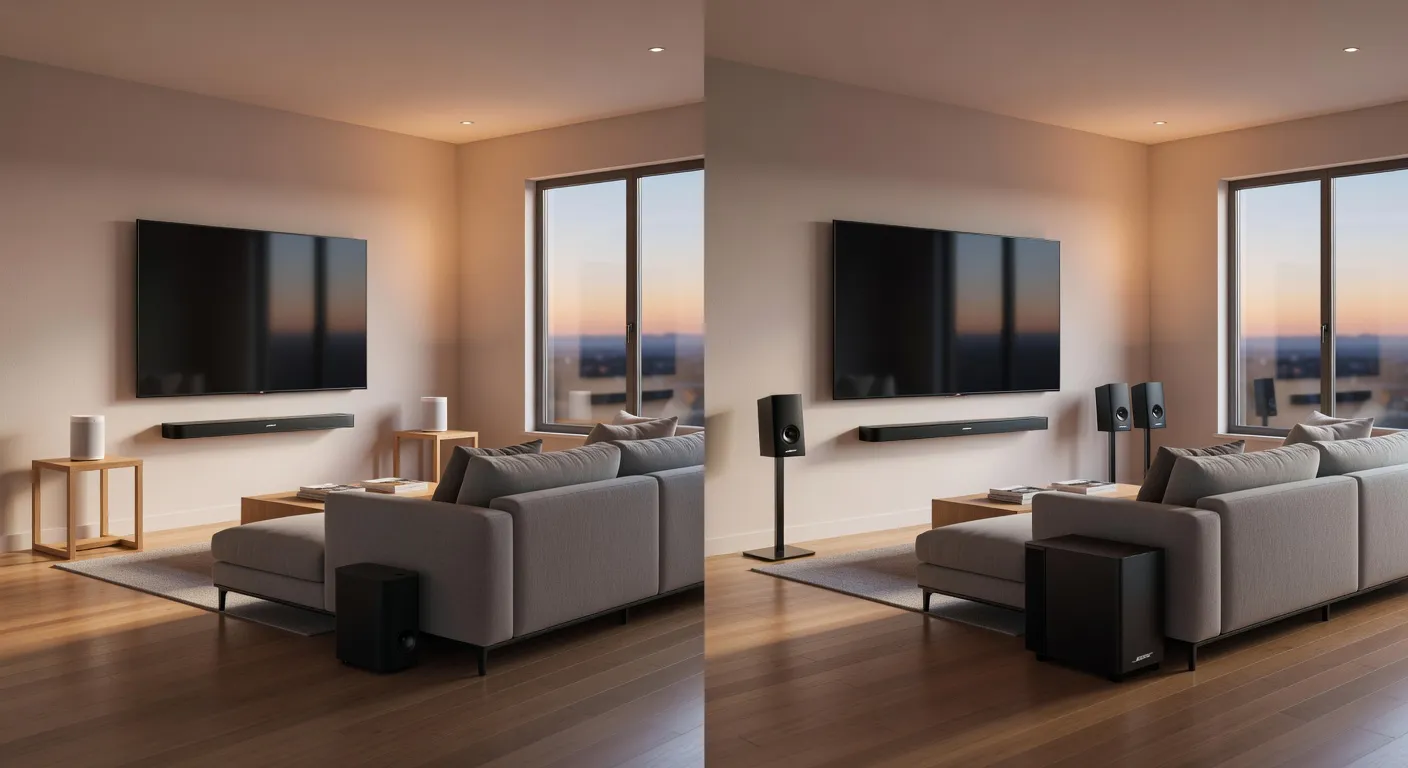
Comparing Sonos vs Bose home theater systems in 2026 reveals two distinct philosophies tailored to elevate your home cinema experience. Sonos focuses on delivering balanced, natural sound with its innovative Sound Motion woofer and TruePlay tuning technology that adapts to your room's acoustics. In contrast, Bose offers a punchier, more dynamic sound profile, featuring AI-assisted dialogue clarity and the highly regarded ADAPTiQ room calibration. Whether you're seeking a cinematic audio journey with Sonos Arc Ultra or a smart, crisp listening experience with the Bose Smart Ultra Soundbar, this comparison will guide you through their strengths, features, and integration capabilities. Expect an in-depth evaluation of sound quality, design, ecosystem compatibility, and value, helping you make an informed choice tailored to your needs.
Did You Know?
Did you know the first commercial home theater system was introduced in the 1970s, revolutionizing home entertainment? Today, Sonos and Bose lead with innovative features that elevate cinematic experiences to new heights.
Source: History of Home Theater Systems
Sound Quality and Performance
The 2026 comparison between Sonos and Bose home theater systems highlights how their sound quality and tuning technologies cater to distinct listening preferences. Sonos, particularly with the Arc Ultra, offers a balanced, natural audio profile that emphasizes clarity and cinematic richness. Its sound is characterized by well-rounded mids, crisp highs, and deep, controlled bass that avoids overwhelming the finer details of audio tracks.
Achieving this sound signature is Sonos's proprietary TruePlay tuning, an automated system that adjusts the speaker’s output based on room acoustics. This smart tuning optimizes the listening experience whether you are in a small room or a large open space. Additionally, the Arc Ultra incorporates advanced Sound Motion woofer technology, which delivers double the bass output compared to earlier Sonos models. This woofer produces impressive low-end presence and impact, ensuring immersive home theater soundscapes without losing balance or articulation.
On the other hand, Bose takes a different approach with its Smart Ultra Soundbar, crafting a sound profile that's more dynamic and punchy. Bose audio has a pronounced bass and treble focus, creating an engaging and exciting listening experience that can feel more visceral to some listeners. This makes it particularly suitable for those who enjoy audio that leaps off the screen with enthusiasm and presence.
Bose’s standout feature is its ADAPTiQ room calibration technology, an advanced headset-based system widely regarded as one of the best room-tuning solutions available. It measures the room’s acoustics and compensates for sound reflections and absorptions, tailoring the output precisely to your environment. Furthermore, the Bose system includes an AI-assisted dialogue mode that sharpens voice clarity, maintaining crisp and easily intelligible vocals even in scenes with heavy background effects or music.
These design choices manifest in a key difference: Sonos prioritizes balanced, realistic audio faithfully reproducing soundtracks, while Bose emphasizes punch and clarity, especially for dialogue. This can be decisive depending on what type of content you consume most often—whether cinematic movies with nuanced soundtracks or fast-paced shows requiring vocal emphasis.
Sonos TruePlay Tuning
Automatically adjusts audio output based on room acoustics for optimal sound.
Bose ADAPTiQ Calibration
Uses headset-based room calibration for precise sound adjustment.
Sound Signature Differences
Sonos offers balanced, natural sound; Bose provides punchier, bass-forward audio.
Dialogue Clarity
Bose excels with AI-assisted dialogue mode for crystal clear vocals.
Advanced Bass Technology
Sonos Arc Ultra's Sound Motion woofer doubles bass output with rich presence.
The comparison table below breaks down the core sound and performance features of the Sonos Arc Ultra and Bose Smart Ultra Soundbar. Dolby Atmos support on both units ensures immersive surround sound, but the Sonos Arc Ultra pushes boundaries with its proprietary Sound Motion woofer that adds substantial depth to bass frequencies. Bose adopts a 5.2 channel layout that strengthens its punchy, treble-forward sound.
Room tuning technologies differ meaningfully: Sonos’s TruePlay offers automatic room acoustic detection, adjusting its output dynamically, while Bose’s ADAPTiQ requires initial headset calibration but then fine-tunes sound for high accuracy. For dialogue-heavy content, Bose’s AI-assisted mode gives it an edge in keeping vocals clear and distinct. Sonos shines with its ecosystem expandability—allowing users to add compatible subwoofers and surround speakers for a full home theater setup. Bose’s expandability is limited but compensates with broad connectivity options including Wi-Fi, Bluetooth 5.0, and integrated voice assistants.
| Feature | Sonos Arc Ultra | Bose Smart Ultra Soundbar |
|---|---|---|
| Audio Format | Dolby Atmos with Sound Motion woofer technology | Dolby Atmos with 5.2 channel layout |
| Room Tuning Technology | TruePlay automatic room tuning | ADAPTiQ headset-based calibration + AI Dialogue mode |
| Bass Performance | Deep, controlled bass with Sound Motion woofer | Pronounced punchy bass |
| Dialogue Clarity | Clear and natural vocal reproduction | Enhanced dialogue with AI-assisted mode |
| Expandability | Supports additional Sonos subs and surrounds | Limited expandability |
| Connectivity Options | Wi-Fi, AirPlay 2, Spotify Connect | Wi-Fi, Bluetooth 5.0, AirPlay 2, Chromecast, Alexa, Google Assistant |
Ultimately, Sonos vs Bose home theater compared reveals each brand's clear strengths in sound quality and performance. Sonos leans into an audiophile-grade cinematic approach with adaptable tuning, pure voice reproduction, and rich bass refinement. Bose offers a sound profile tuned for lively, punchy playback and crystal-clear dialogue, enhanced by advanced calibration and AI technology. Your choice will hinge on whether you prefer the balanced, refined soundstage of Sonos or the live, engaging presence of Bose.
Current Product Lineup
Sonos vs Bose: 2026 Home Theater Showdown
Explore the strengths of the Sonos Arc Ultra and Bose Smart Ultra Soundbar in the current market. Both deliver immersive Dolby Atmos experiences with unique tuning technologies and smart connectivity options.
- ✓ Sonos Arc Ultra with Sound Motion woofer
- ✓ Bose Smart Ultra Soundbar with ADAPTiQ calibration
- ✓ Dolby Atmos support and smart features
Sonos's flagship home theater offering in 2026, the Sonos Arc Ultra, stands out with its advanced Sound Motion woofer technology that delivers bass twice as powerful as its predecessor. It prides itself on a balanced and natural audio output that emphasizes a cinematic experience. Sonos employs proprietary TruePlay tuning, which adapts sound according to room acoustics, ensuring optimal performance in diverse environments. The design is minimal and curved, making it a subtle yet elegant addition to modern interiors.
In contrast, the Bose Smart Ultra Soundbar focuses on a more punchy and exciting sound signature, with pronounced bass and bright treble. It features nine precisely positioned transducers and uses Bose's acclaimed ADAPTiQ room calibration system combined with an AI-assisted dialogue mode. This innovation enhances vocal clarity without sacrificing the excitement of dynamic soundtracks. Bose integrates multiple connectivity options including Wi-Fi, Bluetooth 5.0, AirPlay 2, Chromecast, and built-in Alexa and Google Assistant, catering to smart home enthusiasts who seek versatility.
While both support Dolby Atmos, the Sonos Arc Ultra’s implementation emphasizes expandable surround and subwoofer options within its ecosystem, appealing to audio enthusiasts who prioritize full immersive setups and reliable multi-room audio synchronization. Bose takes a slightly different approach with a 5.2 channel layout designed for everyday listening comfort and sharp dialogue clarity, striking a balance between impressive cinematic sound and smart integration capabilities.
The following table breaks down the essential features and specifications of both systems to give a clear side-by-side comparison.
| Feature | Sonos Arc Ultra | Bose Smart Ultra Soundbar |
|---|---|---|
| Audio Format | Dolby Atmos with Sound Motion woofer technology | Dolby Atmos with 5.2 channel layout |
| Room Tuning | TruePlay tuning | ADAPTiQ calibration + AI Dialogue mode |
| Connectivity | Wi-Fi, AirPlay 2, Spotify Connect | Wi-Fi, Bluetooth 5.0, AirPlay 2, Chromecast, Alexa & Google Assistant |
| Design | Minimal, curved, interior-friendly | Slim, modern with premium materials |
| Best For | Cinematic sound enthusiasts and multi-room setups | Everyday listening, dialogue clarity, smart home integration |
Sonos’s emphasis on ecosystem expandability remains unmatched, allowing consumers to build a fully customized home theater experience with additional subwoofers and surround speakers. The Arc Ultra's seamless integration into the wider Sonos multi-room system offers software reliability and convenience for those invested in smart home audio.
Bose, meanwhile, appeals to users who prioritize AI-enhanced dialogue modes and versatile voice assistant support. Its soundbar is ideal for those looking for quick setup, stylish aesthetics, and a robust smart assistant ecosystem baked directly into the hardware.
Both brands represent top-tier choices for home theater setups in 2026, but their distinct approaches to tuning, connectivity, and user experience cater to different audiences. Prospective buyers must weigh sonic preferences and ecosystem needs to determine which product aligns best with their entertainment goals.
Key Specifications and Features
The Sonos Arc Ultra and Bose Smart Ultra Soundbar stand as flagship models representing distinct philosophies in home theater audio design. The Sonos Arc Ultra excels in delivering a refined and cinematic Dolby Atmos experience, boasting proprietary Sound Motion woofer technology that doubles the bass output compared to its predecessors. Paired with Sonos’s TruePlay tuning, the system adapts dynamically to any room’s acoustics, lending a balanced, immersive sound signature that enchants audio enthusiasts. Its seamless integration into Sonos’s multi-room ecosystem and compatibility with additional Sonos subwoofers and surround speakers position it as an expandable centerpiece for high-fidelity home theaters.
Conversely, the Bose Smart Ultra Soundbar targets users who prioritize punchy audio performance with vibrant bass and crisp treble. Its 5.1.2 channel layout and nine precisely positioned transducers power its Dolby Atmos soundstage, delivering exciting but controlled audio that fills the room with energy. The built-in ADAPTiQ calibration system, recognized as one of the best headset-based room tuning methods available, combines effectively with an AI-assisted dialogue mode to maintain vocal clarity even amidst action-heavy scenes, a unique strength for everyday viewing experiences.
Sonos Arc Ultra Features
The Arc Ultra’s sound system is driven by advanced hardware including the Sound Motion woofer and TruePlay tuning, making it exceptionally adaptive. Its minimalist, curved design fits naturally into modern home interiors, while bringing Sonos's renowned ecosystem benefits such as software reliability, multi-room synchronization, and expandable surround sound capabilities. This model supports Dolby Atmos audio formats and interfaces primarily via Wi-Fi, AirPlay 2, and Spotify Connect, cementing its connectivity with popular streaming services and smart devices.
Bose Smart Ultra Soundbar Features
Bose’s Smart Ultra emphasizes versatility and voice intelligibility with its nine transducers and proprietary ADAPTiQ room calibration that customizes audio output precisely for your environment. The soundbar includes an AI-assisted dialogue enhancement feature, ensuring that voices remain sharp and clear without compromising effects or musical elements. Its Dolby Atmos support and 5.1.2 configuration provide an immersive sound experience and a sleek, premium-built form factor designed to complement any living space.
Connectivity and Smart Integration
Connectivity is a key differentiator. Sonos leans heavily into Wi-Fi-based options with AirPlay 2 and Spotify Connect built in, targeting users embedded in the Sonos ecosystem. Meanwhile, Bose offers broader wireless options including Bluetooth 5.0 and Chromecast alongside Wi-Fi and AirPlay 2, with added voice control assistants like Alexa and Google Assistant integrated directly into the soundbar. This versatility makes Bose a more flexible choice for smart home enthusiasts looking for hands-free control and multi-platform compatibility.
Sonos Arc Ultra Features
Dolby Atmos with advanced Sound Motion woofer and TruePlay tuning for cinematic sound. Seamlessly integrates into Sonos multi-room ecosystem with expandable surround and subwoofer options.
Bose Smart Ultra Soundbar Features
Dolby Atmos with 5.1.2 channel layout, nine transducers, ADAPTiQ room calibration, AI-assisted dialogue mode ensuring crystal clear vocals.
Connectivity & Smart Features
Sonos supports Wi-Fi, AirPlay 2, and Spotify Connect. Bose adds Bluetooth 5.0, Chromecast, Alexa, and Google Assistant for smart home integration.
Design & Build
Sonos Arc Ultra sports a minimal curved design fitting modern interiors. Bose Smart Ultra Soundbar uses a slim profile with premium materials for sleek presence.
User Experience and Integration
Sonos offers a polished and intuitive user experience primarily through its dedicated Sonos app. Setup begins with the app-guided TruePlay tuning, which intelligently adjusts the Sonos Arc Ultra’s sound output to the unique acoustics of your room. This step ensures balanced and natural audio performance optimized for your environment. The app also provides effortless multi-room control, allowing users to expand their setup seamlessly with additional Sonos speakers, subwoofers, and surround sound units across the home.
In contrast, Bose focuses on a straightforward calibration experience with its Bose Music app combined with the ADAPTiQ headset for room calibration. This system delivers excellent room sound tuning and benefits from AI-assisted dialogue mode, which enhances voice clarity without compromising overall sound impact. The Bose interface is clean and well-designed, but some users find the added Bluetooth connectivity and built-in voice assistants enhance usability beyond what Sonos offers.
When it comes to ecosystem integration, Sonos emphasizes Wi-Fi connectivity and compatibility with AirPlay 2 and Spotify Connect. This supports incredibly stable multi-device music streaming. Bose also supports Wi-Fi but adds Bluetooth 5.0 for flexible device pairing and Chromecast streaming options. Moreover, the Bose Smart Ultra Soundbar integrates built-in voice assistants—Alexa and Google Assistant—which provide hands-free control for smart home devices and media playback, an advantage for users invested in a voice-activated smart home environment.
The Sonos system’s strength lies in its expansive ecosystem. Adding components like the Sonos Sub and surround speakers via the app turns a simple soundbar into a full cinematic surround sound solution. This scalability appeals strongly to audio enthusiasts who want a cohesive, upgradeable home theater experience.
Bose, however, targets ease and smart integration, making it ideal for everyday users desiring crisp dialogue and voice assistant functionality without the need for complex expansion. Its premium materials and modern design add a user-friendly elegance to the setup.
Sonos Setup
Begin with the Sonos app for TruePlay tuning and seamless multi-room integration.
Bose Setup
Use the Bose Music app and ADAPTiQ calibration headset for optimal room sound.
Integration
Sonos uses Wi-Fi and AirPlay 2, while Bose adds Bluetooth and voice assistant compatibility.
Ecosystem Expansion
Sonos supports additional Sonos speakers for a cohesive home theater system.
Smart Features
Bose incorporates built-in Alexa and Google Assistant for smart home control.
Price Point and Value
When considering the Sonos Arc Ultra and Bose Smart Ultra Soundbar in 2026, price and value play a critical role in the purchase decision. The Sonos Arc Ultra commands a premium price, retailing around $1,199. This higher price reflects its advanced sound technology, including proprietary TruePlay tuning and Sound Motion woofer technology, which delivers a rich, cinematic audio experience. Its value is heightened by the ability to seamlessly integrate into the Sonos multi-room ecosystem and expand with additional Sonos Sub and surround speakers. This makes it an excellent choice for audiophiles who prioritize a high-fidelity home theater setup and future expandability.
In contrast, the Bose Smart Ultra Soundbar is positioned as a more affordably priced option, with a retail price near $999. Bose focuses on delivering strong value for money by integrating smart features such as AI-assisted Dialogue mode and the ADAPTiQ room calibration system, which helps balance voice clarity and immersive effects. This soundbar appeals especially to those who value easy smart home connectivity, including built-in Alexa and Google Assistant support, without sacrificing audio performance. Its punchier sound profile and excellent dialogue clarity make it well-suited for everyday listening in family or casual viewing environments.
The affordability of the Bose Smart Ultra Soundbar makes it accessible to a wider audience, offering much of the latest home theater tech at a lower cost than the Sonos Arc Ultra. However, for users who seek the utmost in sound quality and ecosystem flexibility—and are willing to invest in premium equipment—Sonos remains the superior value proposition. The enhanced bass presence, room-specific tuning, and ecosystem integration ensure a richer, more customizable experience, justifying the higher price for serious enthusiasts.
Overall, Sonos delivers exceptional value for customers focused on sound quality and system expandability, while Bose provides a compelling, budget-conscious option that does not compromise on dialogue clarity or smart home features. Choosing between them depends heavily on budget, usage priorities, and whether multi-room playback and future upgrades are important factors in the home theater experience.
Sonos Arc Ultra Pricing and Value
The Sonos Arc Ultra is priced at a premium, reflecting its advanced sound technologies and ecosystem integration.
- • Retail price around $1,199
- • Expandable with add-ons like Sonos Sub and One SL speakers
- • Excellent for audiophiles seeking cinematic sound and multi-room connectivity
Bose Smart Ultra Soundbar Pricing and Value
Bose Smart Ultra offers competitive pricing with strong smart home features and dialogue clarity.
- • Priced near $999 offering value in smart features
- • Includes AI-assisted Dialogue mode with ADAPTiQ room calibration
- • Ideal for those prioritizing voice clarity and smart assistant integration
Final Comparison Summary
When comparing the Sonos Arc Ultra and the Bose Smart Ultra Soundbar in 2026, the deciding factor primarily depends on what you prioritize most in a home theater system. Sonos offers a more cinematic and immersive audio experience with its finely balanced sound profile, powered by proprietary TruePlay tuning and the innovative Sound Motion woofer technology. This makes it an ideal choice for audiophiles and home theater enthusiasts who want rich mids, lush highs, and deep, controlled bass that adapts intelligently to their room acoustics.
Bose, on the other hand, prioritizes excitement and clarity, delivering punchier bass and treble that jump out with impactful presence. Its standout AI-assisted dialogue mode keeps vocals crisp and intelligible, even in loud scenes, which benefits those who value clear speech above all. The ADAPTiQ room calibration system, regarded as one of the best in the industry, ensures finely tuned sound that suits everyday viewing and multi-purpose listening scenarios.
From a design and usability perspective, both systems bring distinct advantages. Sonos adopts a minimal, curved design that fits seamlessly into modern interiors and is part of a broader multi-room ecosystem that allows easy expansion with Sonos subwoofers and surround speakers. This ecosystem reliability and expandability is unmatched, making it a long-term investment for smart home audio expansions. Meanwhile, Bose's Smart Ultra Soundbar embraces a slim and modern aesthetic crafted with premium materials. It boasts superior connectivity options, including built-in Alexa and Google Assistant, along with Bluetooth 5.0 and Chromecast support, which provide versatile smart home integration.
Connectivity is another point of differentiation. Sonos focuses on Wi-Fi streaming with AirPlay 2 and Spotify Connect, creating a seamless experience for users heavily invested in wireless high-fidelity audio networks. Bose expands the scope with Bluetooth 5.0 support in addition to Wi-Fi and AirPlay 2, offering more flexible device pairing options suitable for users who frequently connect multiple devices or stream from mobile phones directly.
Important Insight
Sonos excels for immersive cinematic sound and expandability, while Bose leads for punchy audio, smart features, and dialogue clarity.
Who Should Choose Sonos?
Sonos Arc Ultra shines for anyone seeking an immersive, cinema-quality soundstage that can evolve with their home theater setup. Its Dolby Atmos sound with Sound Motion woofer technology delivers true surround sound effects with precision, making movie nights engaging and lifelike. Sonos's seamless ecosystem connectivity is perfect for those who already own or plan to invest in multi-room speakers, allowing coordinated playback throughout the house.
The reliability of TruePlay tuning, which automatically adapts sound profiles to room shape and furnishings, means the Arc Ultra will sound optimal whether placed in a living room or a dedicated media room. Audiophiles will appreciate the balanced natural sound signature and the brand’s consistent software updates that optimize performance over time.
Who Should Choose Bose?
For users prioritizing vocal clarity, punchy sound, and smart home integration out of the box, the Bose Smart Ultra Soundbar stands out. Its nine precisely positioned transducers deliver a dynamic audio experience that feels exciting and lively, great for sports, action movies, and music. The AI-assisted dialogue enhancement ensures that conversations and narration are never drowned out by sound effects or background music.
Additionally, the Bose system’s flexible connectivity options, from Bluetooth to integrated voice assistant support, cater to tech-savvy users who want seamless smart home control and easy compatibility with multiple devices. It is especially well-suited for households that use voice commands frequently and want a straightforward audio upgrade without the need for a larger multi-speaker ecosystem.
Overall Buying Considerations
Both Sonos and Bose offer high-end home theater soundbars with Dolby Atmos capability, but their distinct sound tuning and ecosystem approaches mean the final choice depends heavily on individual priorities. Sonos is the clear winner for immersive audio detail, multi-room expandability, and a natural soundstage, excellent for dedicated media lovers.
Bose appeals more to those who want vibrant, punchy audio coupled with smart technology integrations that elevate casual everyday listening and television dialogue comprehension. Its room calibration and AI features provide practical benefits for less acoustically controlled environments.
Budget should also be factored. Sonos tends to be pricier, especially once additional subwoofers and surround speakers are included, while Bose offers a highly competitive package with robust built-in smart features at a comparable price point. Both brands provide strong customer support and regular firmware updates, maintaining system performance and adding new features over time.
Frequently Asked Questions
When comparing Sonos and Bose home theater systems in 2026, many wonder how their sound quality stacks up. Sonos delivers balanced, natural audio highlighted by rich mids and deep bass, achieved through its proprietary TruePlay room tuning and Sound Motion woofer technology. Bose, meanwhile, emphasizes a punchier and more exciting sound with pronounced bass and treble, enhanced by its ADAPTiQ calibration and an AI-assisted dialogue mode that ensures vocal clarity in complex scenes.
Choosing between these two brands depends on your priorities. Sonos is ideal for those seeking a cinematic experience and the ability to build a cohesive multi-room audio ecosystem with reliable software updates. In contrast, Bose appeals to users wanting ease of use, smart integration with Alexa and Google Assistant, and a focus on everyday listening and dialogue clarity.
Regarding compatibility, both brands support Apple’s AirPlay 2, making streaming from iOS devices seamless. Sonos systems use Wi-Fi and Spotify Connect for connectivity, while Bose expands options further with Bluetooth 5.0, Chromecast, and built-in voice assistants. This makes Bose slightly more versatile for those using a mixed array of smart home devices.
How does Sonos compare to Bose in sound quality? ▼
What should I consider when buying a home theater system from Sonos or Bose? ▼
Are Sonos and Bose systems compatible with other devices? ▼
Conclusion
Sonos vs Bose home theater compared in 2026 reveals two distinct approaches to delivering high-quality audio. The Sonos Arc Ultra stands out for its balanced, cinematic sound, enhanced by TruePlay tuning and Sound Motion woofer technology. It excels in providing immersive Dolby Atmos experiences and seamless integration with the Sonos multi-room ecosystem, making it a top pick for audio enthusiasts and those who value expandability.
In contrast, the Bose Smart Ultra Soundbar delivers a punchier, more exciting sound profile with a focus on dialogue clarity thanks to AI-assisted modes. Its robust smart home compatibility, including built-in Alexa and Google Assistant, is perfect for everyday users who want an engaging soundbar with smart functionality.
Choosing between these two ultimately depends on your priorities: Sonos is the better choice for audiophiles seeking deep bass and a full home theater expansion, while Bose appeals to users who prioritize voice clarity and smart assistant integration for daily use. Both remain highly competitive in 2026, offering compelling features tailored for different listening preferences.
🎯 Key Takeaways from Sonos vs Bose Home Theater Comparison
- → Sonos Arc Ultra excels in cinematic sound quality and multi-room ecosystem integration.
- → Bose Smart Ultra Soundbar offers punchier sound with superior dialogue clarity and smart assistant features.
- → Sonos is ideal for audiophiles seeking deep bass and advanced expandability; Bose suits everyday users valuing voice clarity and smart home compatibility.
TL;DR: In 2026, Sonos and Bose home theater systems present contrasting sound philosophies tailored for different listening experiences. Sonos emphasizes balanced, natural sound through its innovative tuning technology, while Bose offers a punchier, dynamic audio profile with advanced room calibration and AI features. This comparison evaluates their sound quality, design, and integration, helping you choose the best fit for your home cinema needs.


